⚠️ Medical Disclaimer
🔔 This article is for educational and general informational purposes only. It is not a substitute for professional medical advice. If you experience irregular periods, rapid weight gain, excessive facial hair, acne, difficulty conceiving, or any PCOD/PCOS-related symptoms, please consult a qualified Gynecologist or Endocrinologist. Do not start or stop any medication or supplement without your doctor’s guidance.
🌸 What is PCOD?
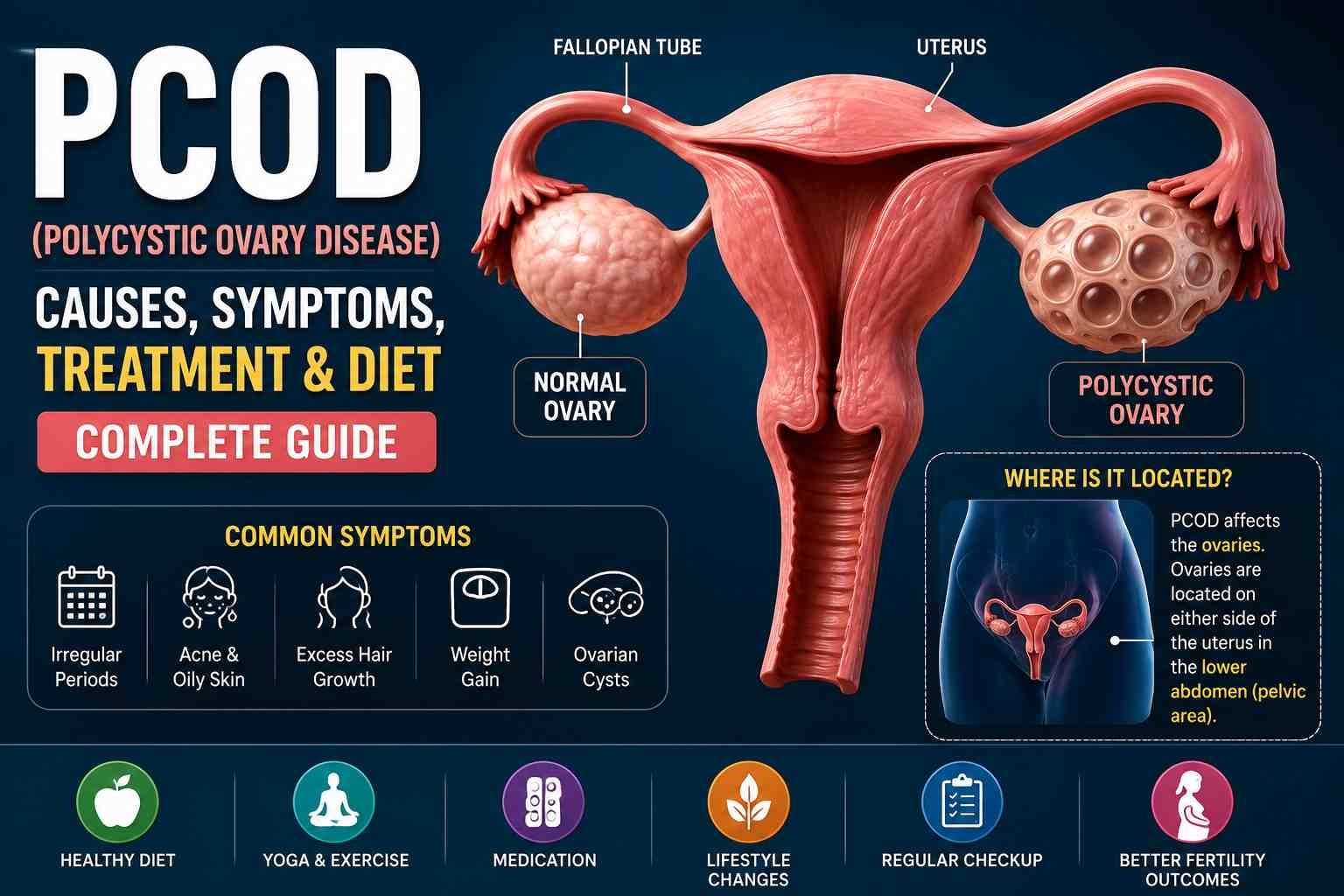
PCOD (Polycystic Ovarian Disease) is a common hormonal condition in women where the ovaries develop multiple small immature follicles that fail to release eggs regularly. This disrupts the normal hormonal balance in the body.
How It Affects You:
- Ovulation becomes irregular or stops
- Hormonal balance gets disrupted
- Menstrual cycle becomes unpredictable
- Fertility may be impacted
Key Facts at a Glance
| Aspect | Details |
|---|---|
| Condition | PCOD (Polycystic Ovarian Disease) |
| Affected Organ | Ovaries |
| Primary Cause | Hormonal Imbalance |
| Common Age Range | 15–40 years |
| Main Symptoms | Irregular periods, weight gain, acne, facial hair |
| Is Treatment Possible? | Yes, manageable |
| Pregnancy Possible? | Yes, with proper care |
| Ayurveda’s Role | Supportive, not a substitute |
The Positive Outlook
With timely diagnosis, balanced nutrition, regular exercise, healthy lifestyle, and prescribed medical treatment, most women can successfully manage PCOD and live normal, healthy lives.
⚖️ PCOD vs PCOS: Key Differences
| Basis | PCOD | PCOS |
|---|---|---|
| Nature | Hormonal disorder | Hormonal + Metabolic syndrome |
| Severity | Generally milder | More complex |
| Main Cause | Hormonal imbalance | Hormonal + Insulin resistance |
| Ovulation | Occasionally affected | Often significantly affected |
| Menstrual Cycle | May be irregular | More irregular or absent |
| Pregnancy | Usually possible with treatment | Difficult without intervention |
| Management | Diet, exercise, medication | Long-term lifestyle + medical care |
| Metabolic Impact | Limited | Affects metabolism, insulin, heart health |
💡 Simple Understanding: PCOD involves immature follicles in ovaries. PCOS is a broader syndrome affecting hormones, metabolism, and insulin function.
🔍 Main Causes of PCOD
| Cause | Explanation |
|---|---|
| ⚖️ Hormonal Imbalance | Excess androgens disrupt ovulation |
| 🍩 Insulin Resistance | Body can’t use insulin effectively; excess insulin stimulates androgen production |
| 🧬 Genetics | Family history increases risk |
| ⚖️ Overweight/Obesity | Affects hormone balance (but normal-weight women can also develop it) |
| 🍔 Unhealthy Diet | Junk food, sugary drinks, processed foods |
| 🪑 Sedentary Lifestyle | Lack of physical activity |
| 😟 Chronic Stress | Disrupts hormonal health |
| 😴 Poor Sleep | Inadequate rest affects hormones |
| 💊 Other Disorders | Thyroid issues or other endocrine problems |
🚨 Symptoms and Long-term Effects
Early Warning Signs
| Symptom | What It Looks Like |
|---|---|
| 📅 Irregular Periods | Delayed, missed, or unpredictable cycles |
| 😣 Acne | Breakouts on face, chest, or back |
| ⚖️ Weight Gain | Particularly around the abdomen |
| 💇 Hair Thinning | Male-pattern baldness or excessive shedding |
| 🧔 Excessive Hair | On face, chin, chest (Hirsutism) |
| 😴 Fatigue | Feeling tired despite rest |
| 😟 Mood Changes | Irritability, mood swings, depression |
Long-term Complications (If Untreated)
- 🚫 Amenorrhea (no periods for months)
- 🤰 Infertility (difficulty conceiving)
- 🍩 Type 2 Diabetes risk
- ❤️ Heart disease risk (high cholesterol)
- ⚫ Acanthosis Nigricans (dark patches on neck/armpits)
- 😔 Mental health issues (anxiety, depression)
🤰 Effect on Pregnancy
Yes, PCOD can affect pregnancy, but it does NOT mean you cannot conceive.
How It Affects Pregnancy
| Issue | Impact |
|---|---|
| 🥚 Irregular ovulation | Eggs not released monthly |
| 📅 Unpredictable fertile days | Harder to time conception |
| 🤰 Delayed conception | May take longer |
| 🍩 Weight/insulin issues | Can complicate fertility |
| 🩺 Need for assistance | May require medical help |
The Good News
Many women achieve normal ovulation and natural conception through:
- Weight management
- Balanced diet
- Regular exercise
- Following medical treatment
👩 Risk Factors
| Risk Factor | Description |
|---|---|
| 🧬 Family history | Mother/sister with PCOD/PCOS |
| 👩 Irregular periods | Since adolescence |
| ⚖️ Overweight | Higher BMI |
| 🍩 Insulin resistance | Prediabetes or metabolic issues |
| 🩺 Hormonal disorders | Thyroid problems |
| 🍔 Poor diet | Junk food, processed food |
| 🪑 Sedentary | Little physical activity |
| 😟 Chronic stress | Ongoing mental pressure |
| 😴 Poor sleep | Inadequate rest |
💡 Note: Normal-weight women can also develop PCOD. Don’t assume based on weight alone.
🔬 Diagnosis Process
| Test | Purpose |
|---|---|
| 🩻 Pelvic Ultrasound | Checks ovaries for multiple follicles |
| 🩸 Hormone Tests | Checks androgen, LH, FSH, estrogen levels |
| 🍬 Blood Sugar / HbA1c | Screens for insulin resistance |
| ❤️ Lipid Profile | Evaluates cholesterol levels |
| 🦋 Thyroid (TSH) | Rules out thyroid disorders |
| 🩸 Prolactin Test | Checks for other hormonal issues |
What Doctors Evaluate:
- 📅 Period regularity
- ⚖️ Weight and BMI
- 🧔 Unwanted hair growth
- 😣 Acne and hair loss
- 🤰 Pregnancy difficulties
💡 Key Point: Ultrasound findings alone don’t confirm PCOD. Diagnosis combines symptoms, physical exam, and multiple tests.
💊 Modern (Allopathic) Treatment
Treatment Goals:
- ✅ Restore hormonal balance
- ✅ Regulate menstrual cycles
- ✅ Control symptoms
- ✅ Improve ovulation
- ✅ Reduce complication risks
Main Approaches
| Approach | Details |
|---|---|
| 🥗 Lifestyle Modification | Balanced diet, exercise, weight management, sleep, stress control |
| 💊 Hormonal Pills | Regulate periods, reduce androgen effects |
| 🍬 Metformin | Improves insulin sensitivity |
| 🥚 Ovulation Drugs | For fertility (if planning pregnancy) |
| 🧴 Anti-androgens | Control acne and excess hair |
| 🩺 Regular Follow-up | Monitor progress and adjust treatment |
⚠️ Critical: Treatment is personalized. Never self-prescribe or alter medications.
🌿 Role of Ayurveda
Ayurveda views PCOD as Kapha-Vata dosha imbalance and offers supportive therapy.
Common Ayurvedic Herbs
| Herb | Traditional Use |
|---|---|
| 🌿 Ashoka | Women’s reproductive health |
| 🌾 Shatavari | Hormonal balance |
| 🍃 Giloy (Guduchi) | Immunity and detoxification |
| 🌰 Triphala | Digestive and metabolic health |
| 🧂 Cinnamon | May support insulin sensitivity |
How to Use Ayurveda
- ✅ As supportive therapy
- ✅ Alongside modern treatment
- ✅ Under qualified practitioner’s guidance
⚠️ Warning: Ayurveda is NOT a substitute for medical treatment. Inform your doctor before starting any herbs.
🏡 Supportive Home Practices
| Practice | Benefit |
|---|---|
| 💧 Drink adequate water | Hydration |
| 🍵 Limit sugar/processed foods | Better blood sugar control |
| 🥣 Regular meal timings | Stable hormones |
| 😌 Stress management | Meditation, deep breathing |
| 😴 7-8 hours sleep | Hormonal health |
| 📖 Follow prescriptions | Consistent care |
⚠️ Important: Not all online home remedies are scientifically proven. Consult your doctor first.
🧘 Best Exercises and Yoga
Beneficial Exercises
| Exercise | Frequency |
|---|---|
| 🚶 Brisk walking | 30-45 min daily |
| 🏃 Jogging/Running | 3-4 times/week |
| 🚴 Cycling | 3-4 times/week |
| 🏊 Swimming | 2-3 times/week |
| 💪 Strength training | 2-3 times/week |
Recommended Yoga Asanas
| Asana | Benefit |
|---|---|
| 🌞 Surya Namaskar | Full body workout |
| 🦋 Titli Asana | Hip flexibility |
| 🐍 Bhujangasana | Spinal health |
| 🌉 Setu Bandhasana | Core strength |
| 👶 Balasana | Relaxation |
| 🪷 Malasana | Pelvic health |
Beneficial Pranayama
- 🌿 Anulom Vilom (Alternate nostril breathing)
- 🌬️ Bhramari (Humming breath)
- 🫁 Deep breathing
💡 Yoga complements but doesn’t replace medical treatment.
🥗 PCOD Diet: What to Eat and Avoid
✅ Foods to Eat
| Category | Foods | Benefits |
|---|---|---|
| 🥬 Greens | Spinach, kale, methi | Fiber, nutrients |
| 🍎 Fruits | Berries, apples, papaya | Vitamins, antioxidants |
| 🌾 Whole grains | Oats, brown rice, millets | Blood sugar control |
| 🫘 Legumes | Lentils, chickpeas, beans | Protein, fiber |
| 🥚 Proteins | Eggs, paneer, tofu, fish | Quality protein |
| 🥜 Nuts & seeds | Almonds, walnuts, flaxseeds | Healthy fats, Omega-3 |
| 🥛 Yogurt | Unsweetened curd | Probiotics |
| 🫒 Healthy oils | Olive, mustard oil | Good fats |
| 💧 Water | 8-10 glasses | Hydration |
❌ Foods to Avoid
| Avoid | Why |
|---|---|
| 🍩 Sugary treats | Spike blood sugar |
| 🥤 Sweetened drinks | High sugar |
| 🍔 Fast food | Unhealthy fats |
| 🍟 Fried food | Trans fats |
| 🍰 Pastries/cakes | Refined flour, sugar |
| 🍞 White bread | Refined carbs |
| 🥫 Processed food | Preservatives, sodium |
| 🍬 Sugary snacks | Blood sugar spikes |
Dietary Tips
- 🕒 Regular meal timings
- 🥗 Include protein + fiber + healthy fats in every meal
- 🍽️ Portion control
- 🚰 Stay hydrated
- 👩⚕️ Consider personalized plan from nutritionist
🛡️ Prevention Tips
| Action | Benefit |
|---|---|
| ⚖️ Maintain healthy weight | Reduces risk |
| 🚶 Stay physically active | Balances hormones |
| 😴 Get 7-8 hours sleep | Hormonal health |
| 😌 Manage stress | Prevents hormone disruption |
| 🚭 Avoid smoking/alcohol | Better overall health |
| 🩺 Regular checkups | Early detection |
| 📅 Doctor consultation | If periods remain irregular |
💡 Complete prevention isn’t always possible (genetic factors), but these habits significantly reduce risk.
❓ FAQs
❓ 1. Can PCOD be permanently cured?
No. It’s a chronic condition, but symptoms can be effectively managed with treatment and lifestyle changes.
❓ 2. Are PCOD and PCOS the same?
No. PCOS is more complex, involving metabolic and insulin issues.
❓ 3. Can I get pregnant with PCOD?
Yes. Most women with PCOD conceive successfully with proper treatment.

❓ 4. Does PCOD only affect overweight women?
No. Normal-weight women can also have PCOD.
❓ 5. Is weight loss necessary?
If overweight, losing 5-10% body weight can improve symptoms significantly.
❓ 6. Are periods always irregular?
Not always. Some have occasional issues, others persistent.
❓ 7. Can Ayurveda cure PCOD?
Ayurveda is supportive, not a cure. Use alongside medical treatment.
❓ 8. Will PCOD prevent marriage/parenthood?
No. It’s a manageable condition, not a barrier to family life.
❓ 9. Is daily exercise mandatory?
Highly recommended for effective management.
❓ 10. Does everyone need medication?
No. Some manage with lifestyle changes alone.
❓ 11. Best diet for PCOD?
Balanced diet with fiber, protein, whole grains, vegetables, healthy fats. Avoid processed foods and sugar.
❓ 12. How is PCOD diagnosed?
Through history, physical exam, hormone tests, blood tests, and ultrasound.
❓ 13. Can stress worsen PCOD?
Yes. Chronic stress disrupts hormones.
❓ 14. Can periods become regular?
Yes. With treatment and lifestyle changes, many achieve regular cycles.
❓ 15. When to see a doctor?
If you have:
- Persistent irregular periods
- No period for 3+ months
- Rapid weight gain
- Excessive facial hair
- Severe acne
- Difficulty conceiving
🌸 Final Takeaway
PCOD is manageable, not a life sentence. With:
- ✅ Timely diagnosis
- ✅ Proper medical care
- ✅ Healthy eating
- ✅ Regular exercise
- ✅ Stress management
- ✅ Consistent follow-up
…most women lead healthy, fulfilling lives and achieve their goals, including pregnancy.
Your health is in your hands. Start today!
💖 Every small step counts toward a healthier, happier you!
